John Sourke

Vice President of Global Biotech Operations at Pfizer

Harnessing AI is Key to Futureproofing Healthcare Manufacturing and Global Supply Chains
The current and future delivery of healthcare manufacturing and global supply chains is being radically reshaped by artificial intelligence (AI), offering unprecedented opportunities to enhance efficiency, resilience, and patient care. AI is not just a technological upgrade, but a fundamental reimagining of how we produce and distribute critical medical resources.
As a company committed to delivering breakthroughs that change patients’ lives, Pfizer is leveraging artificial intelligence (AI) to transform pharmaceutical operations worldwide, to deliver medicines faster, more efficiently, and with uncompromising quality.
AI in Manufacturing
Traditional manufacturing processes are inherently limited by human capacity and linear thinking. AI breaks through these constraints, enabling real-time optimisation and predictive intelligence.
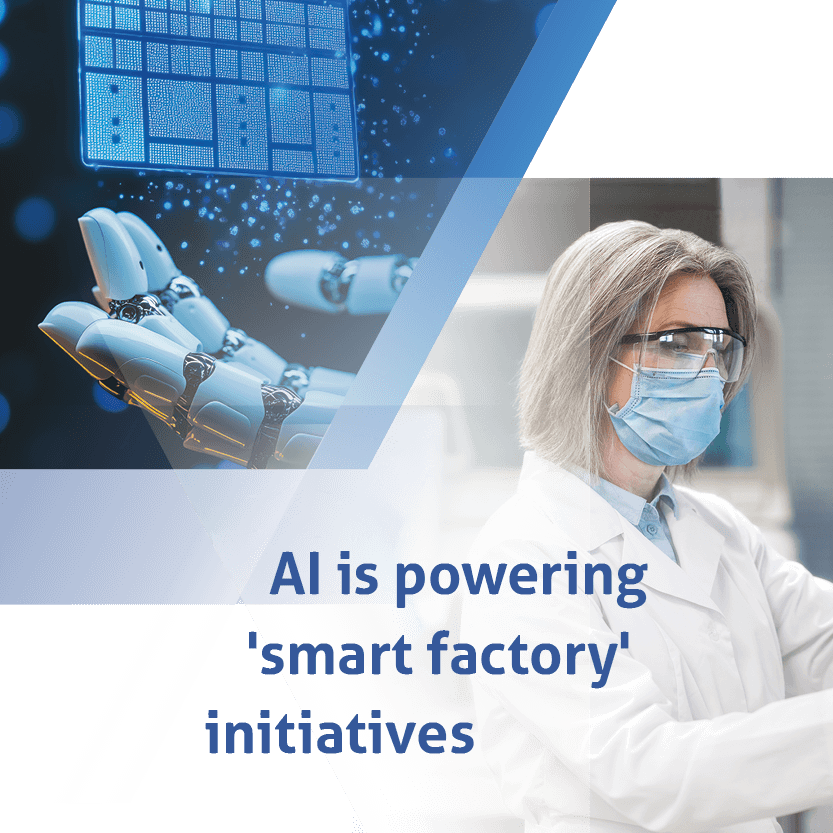
Across Pfizer’s global supply network, including its Irish sites in Cork, Dublin, and Kildare, AI is powering “smart factory” initiatives that optimize production and reduce downtime. At Grange Castle in Dublin - a key hub for biologics and sterile injectables - Pfizer has deployed advanced AI-driven process monitoring systems to analyse thousands of data points in real time, predicting potential deviations before they occur and ensuring consistent product quality.
One of the most compelling applications is the concept of the "Golden Batch" - where AI identifies optimal manufacturing parameters and can detect anomalies in real-time, all in support of our aim to improve product yield by 10% and cycle time by 25%, to deliver faster, more cost-effective medical production.
Another valuable innovation is the Smart Factory Co pilot, an AI platform that assists operators by providing predictive insights and automated recommendations. This system has already delivered measurable benefits: improved yield, reduced waste, and faster troubleshooting. Its impact was recognised at the 2024 AI Awards in Dublin, where Pfizer won “Best Application of AI in a Large Enterprise.”
Why It Matters
The reality is that AI is enabling us to move from reactive to proactive manufacturing. Predictive maintenance powered by machine learning minimises equipment failures, while AI-driven scheduling optimises production runs to meet global demand. These capabilities are critical for sterile injectables and biotech products, where precision and reliability are paramount.
Looking Ahead
As we look to the future, AI in healthcare manufacturing represents more than technological progress. It's a pathway to more responsive, efficient, and patient-centric medical production.
Pfizer’s AI strategy extends beyond manufacturing to R&D, clinical trials, commercial and supply chain optimisation. By combining cutting-edge technology with deep pharmaceutical expertise, Pfizer is setting a new standard for intelligent, sustainable, and resilient manufacturing - always focused on breakthroughs that change patients’ lives.